
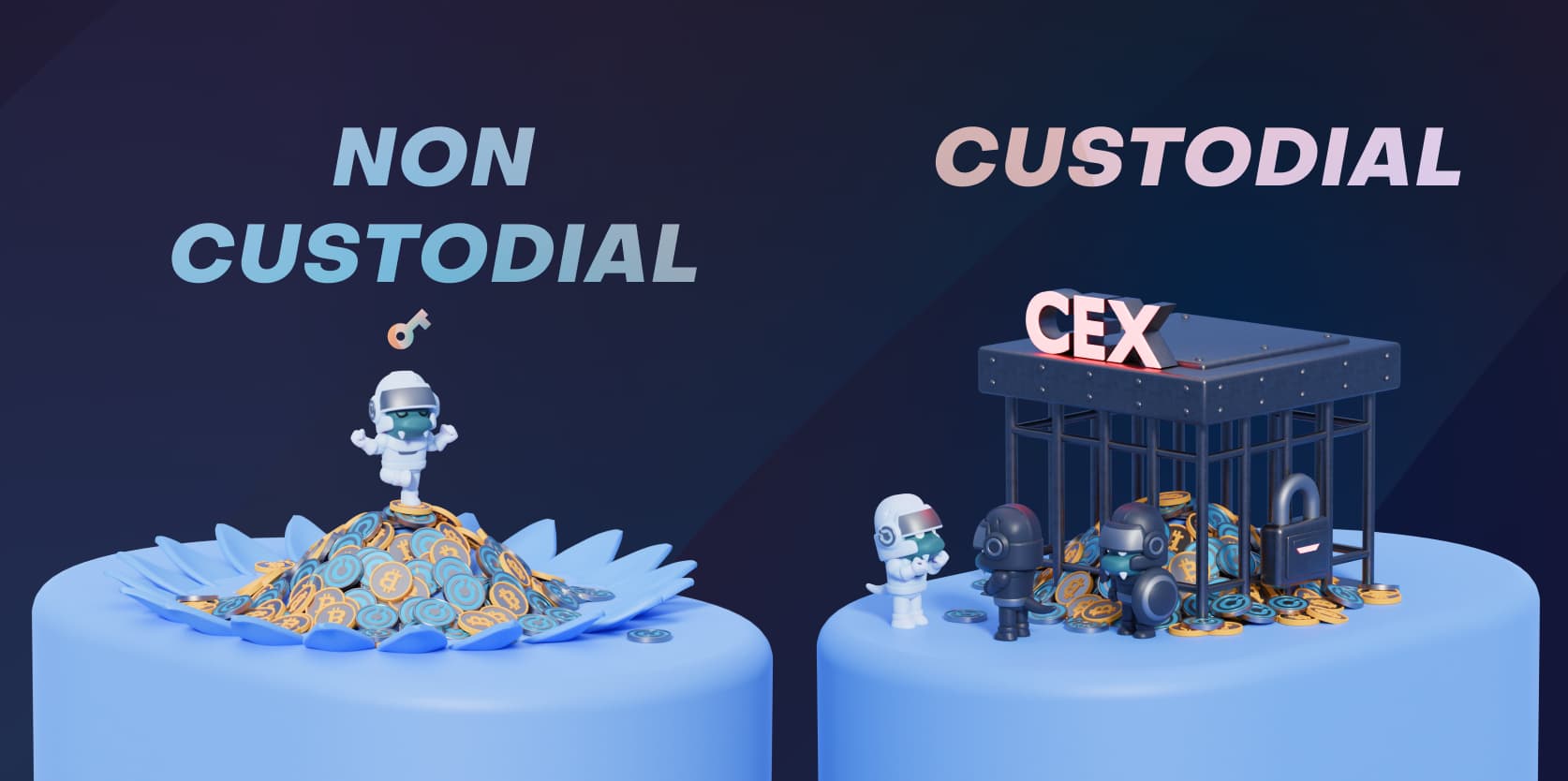
Non-custodial technology and crypto wallets provide the highest level of security for crypto assets across the blockchain space by giving users full control of their wallets and funds.
Many people seem to make arbitrary choices when choosing a preferred crypto wallet.
However, deciding on a specific wallet is an important part of one's crypto experience. The type of wallet you choose may depend on several factors such as frequency of trades, which cryptocurrencies a wallet supports, and/or wallet features.
Users also have to choose between maintaining control of their private keys or leaving them with the wallet provider. Before purchasing any crypto, users must decide whether they want to use a custodial wallet or a non-custodial wallet.
Key Takeaways
- Security and Control: Non-custodial wallets offer users complete control over their private keys and funds, ensuring a higher level of security and eliminating reliance on third parties.
- Choosing the Right Wallet: Selecting a crypto wallet involves considerations such as trading frequency, supported cryptocurrencies, and wallet features. It's essential to choose between custodial and non-custodial options based on these factors.
- Custodial vs. Non-Custodial: Custodial wallets hold private keys on behalf of users but expose them to risks like hacks. Non-custodial wallets, on the other hand, ensure full ownership and quicker transaction times but place the responsibility of security on the user.
- Non-Custodial Wallet Advantages: These wallets provide faster transactions, better asset safety, and seamless interaction with decentralized finance (DeFi) platforms. They are ideal for users seeking privacy and long-term asset holding.
What Is a Non-Custodial Wallet?
A non-custodial wallet allows the owner to control their own private keys. People who use non-custodial wallets don't outsource the security or trust to any institutions, making themselves entirely in charge of all funds and transactions.
Non-custodial wallets support censorship-resistant transactions. In most cases, no single centralized entity can tamper with or confiscate assets held in these wallets.
Each user's non-custodial wallet uses a 'mnemonic phrase' or 'seed phrase' that usually comprises of 12 or 24 random words — essentially a password giving the user access to a wallet's private keys and its funds.
One popular example of a non-custodial wallet is Komodo Wallet, which gives users full control over their private keys and digital assets. This ensures complete ownership and enhanced security, without the need to rely on third parties.
The Difference Between Custodial and Non-Custodial Wallets
When managing cryptocurrencies, understanding the distinction between custodial and non-custodial wallets is essential. Each type offers unique benefits and drawbacks based on user needs and security preferences.
Custodial Wallet Overview
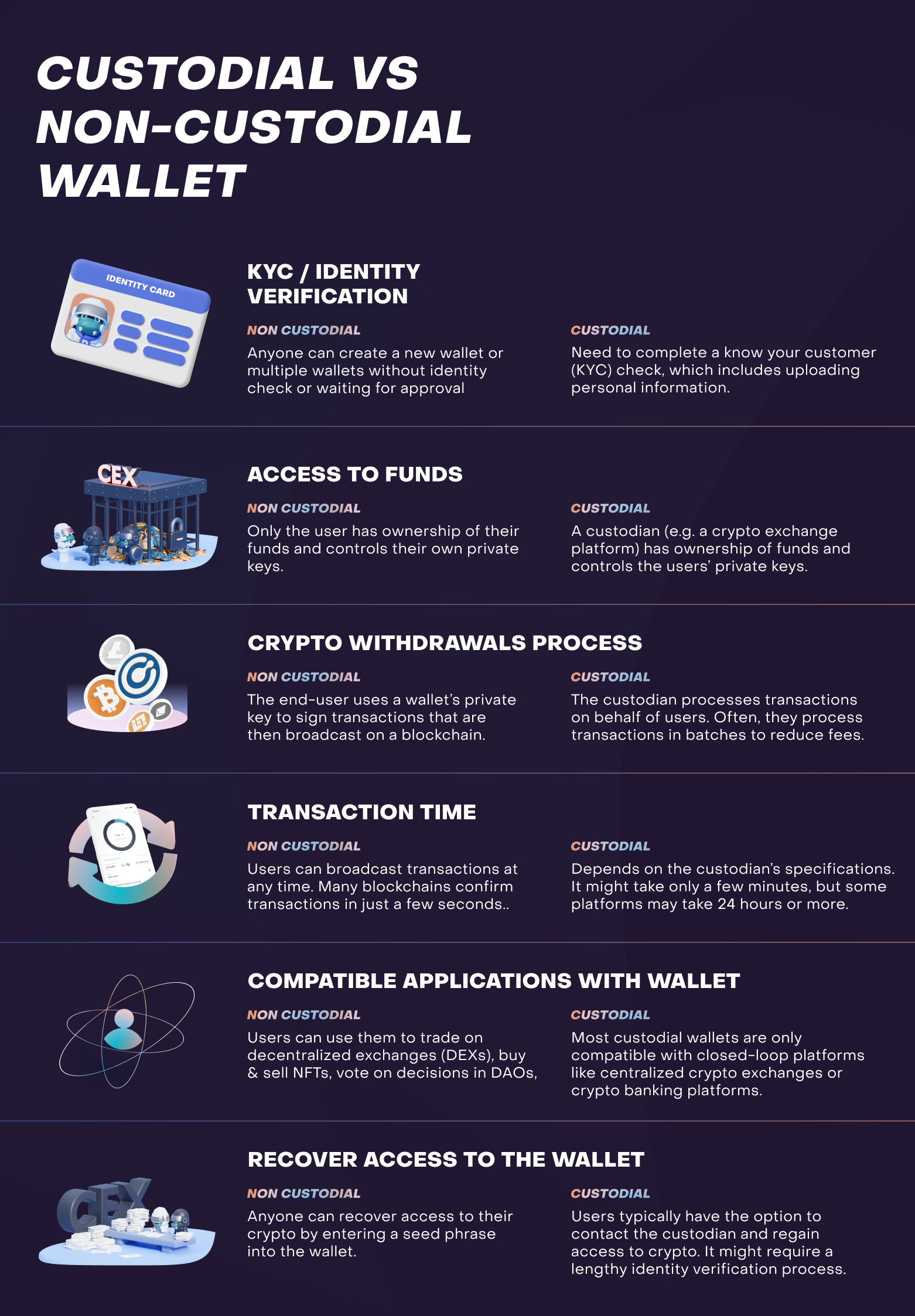
A custodial wallet is one where the private keys to access and manage crypto assets are held by a third-party provider, such as a centralized exchange or wallet service. This means the provider is responsible for securing the funds and managing key recovery. For users, custodial wallets offer convenience as they don’t have to worry about storing or safeguarding their private keys.
Key aspects of custodial wallets include:
- Ease of Use: Custodial wallets are often beginner-friendly, allowing users to interact with their crypto assets without handling private keys. The provider manages key security and wallet recovery.
- Security Risks: Since the private keys are stored by the wallet provider, users must trust that the provider’s security measures are robust. Custodial wallets are at higher risk of large-scale hacks or data breaches.
- Transaction Delays: Transactions in custodial wallets may take longer to process, as they require approval from the provider. This can result in brief delays as transactions move through centralized systems.
Custodial wallets are often favored by users who prioritize convenience and prefer not to handle the technical aspects of key management. However, they are not ideal for those who value full control and security.
Non-Custodial Wallet Overview
Non-custodial wallets, by contrast, give users complete control over their private keys and crypto assets. With these wallets, users are solely responsible for managing and securing their private keys, typically through a seed phrase or other backup methods.
Key aspects of non-custodial wallets include:
- Full Control: Users retain control over their assets at all times. No third party can access or manage funds, providing complete autonomy.
- Enhanced Security: Without relying on a centralized entity, non-custodial wallets offer greater protection against hacks and breaches. However, the responsibility of safeguarding private keys lies entirely with the user.
- Real-Time Transactions: Transactions made via non-custodial wallets are executed directly on the blockchain, often faster than custodial wallet transactions since they don’t go through an intermediary.
While non-custodial wallets offer higher security and autonomy, they require users to carefully manage their private keys to avoid losing access to their funds. They are ideal for more experienced users or those prioritizing privacy and control.
Benefits of Non-Custodial Wallets
When choosing a crypto wallet, there are several factors to consider. There are many benefits of using a non-custodial wallet to HODL cryptocurrencies.
Your Keys, Your Coins
Non-custodial wallets have gained tremendous traction because they provide users with autonomy and a high degree of self-sovereignty. Users don't require authorization from a third party to handle assets or perform any transactions. Users have complete control of their private keys, which makes it much easier to send and receive crypto.
Safety of Assets
Since all of the details related to a users' crypto wallet and its funds are with the user, there is little to no risk of a remote hack. The inherent safety of non-custodial wallets is a major reason many people are slowly shifting away from custodial options for cryptocurrency trading and towards decentralized exchanges (DEXs) that support DEX wallets.
Instant Transactions
Transactions conducted via non-custodial wallets are faster as they don't require any middlemen or centralized authorities for approval.
DeFi Compatibility
Non-custodial wallets are necessary for interacting with most decentralized finance platforms and permissionless blockchain protocols. The number of DeFi applications such as DEXs, crypto lending platforms, and DAOs has skyrocketed over the past couple of years.
Types of Non-Custodial Wallets
Non-custodial wallets can be broken down further into two major categories: hardware wallets and software wallets.
Non-Custodial Hardware Wallets
Non-custodial hardware wallets, also known as cold wallets, are simple devices that store private keys offline for better security. They usually look like small external drives. Access to assets held in non-custodial hardware wallets requires users to plug the devices into computers and manually confirm transactions through the device.
Hardware wallets aren't susceptible to computer viruses or hacks. However, users must keep private keys safe to reduce the risk of theft. A non-custodial hardware wallet is the safest option for crypto users with large amounts of digital assets in their portfolios, as well as those focused on long-term holding. Popular examples of non-custodial hardware wallets are Trezor and Ledger.
Non-Custodial Software Wallets
Non-custodial software wallets are applications include web browser wallets or applications that users download on computers or mobile device. Non-custodial software wallets have direct access to most public blockchains and require the user to provide their private keys or passwords to access stored assets. Unlike cold wallets, the private keys are accessible online.
Many users now understand the risks of custodial wallets and prefer to use non-custodial options for better security. Although custodial wallets are currently the more popular option, this type of wallet doesn't provide users with the privacy expected of blockchain technology. Using a non-custodial wallet is the best way to keep assets safe, especially when the user has a large portfolio or when the plan is to ride out a bear market. Several different factors help users determine their preferred non-custodial wallet.
Try Komodo Wallet
Komodo Wallet is a non-custodial multi-coin wallet and cross-chain/cross-protocol decentralized exchange rolled into one app. Store crypto in your own wallets and make cross-chain swaps while always controlling their private keys.
You own your keys, so you control your coins. Komodo Wallet supports BTC, ETH, LTC, DOGE, KMD, and thousands of assets across dozens of blockchains.
FAQ
What happens if I lose my private key?
If you lose your private key or seed phrase for a non-custodial wallet, you lose access to your funds permanently. Since non-custodial wallets don't rely on third parties, there's no recovery option. It’s essential to store your private key securely and keep backups in safe locations.
Are non-custodial wallets safe for beginners?
Non-custodial wallets can be safe for beginners as long as users understand the responsibility of managing their private keys. While they provide superior security, beginners should take extra care to follow best practices for backing up their seed phrases and securing their wallets.
How do I choose between a hardware and software wallet?
Choosing between a hardware and software wallet depends on your needs:
Hardware Wallet: Best for long-term storage and large amounts of assets, offering offline security. Ideal for those who prioritize maximum security.
Software Wallet: More convenient for frequent transactions and accessible via mobile or desktop apps. Suitable for users seeking a balance between security and ease of use.