
Crypto traders today have more choices than ever, but not all trading methods offer the same level of control, security or transparency. Understanding the difference between atomic swaps and centralized exchange trading helps users make thought-out decisions about how and where they trade digital assets.
This comparison matters because trading infrastructure directly affects custody of funds, privacy and exposure to third-party risk. Komodo Platform has spent more than nine years developing atomic swap technology to give users a practical alternative to centralized trading models.
Overview of Atomic Swaps
Atomic swaps allow two users to trade cryptocurrencies directly with each other across different blockchains. These trades happen peer to peer, without relying on a centralized service to hold funds or approve transactions.
At a high level, atomic swaps use smart cryptographic rules that make sure both sides of a trade complete successfully or not at all. If one party does not follow through, funds are automatically returned. This removes the need for trust between participants and eliminates custodial risk.
Overview of Centralized Exchange Trading
Centralized exchanges act as intermediaries between buyers and sellers. Users deposit funds into exchange-controlled wallets and trade through internal order books managed by the platform.
Because assets are held by the exchange, users rely on the service to secure funds, process withdrawals and maintain system integrity. Accounts are typically linked to personal information and access can be restricted based on regional rules or internal policies.
Key Differences Between Atomic Swaps and Centralized Exchanges
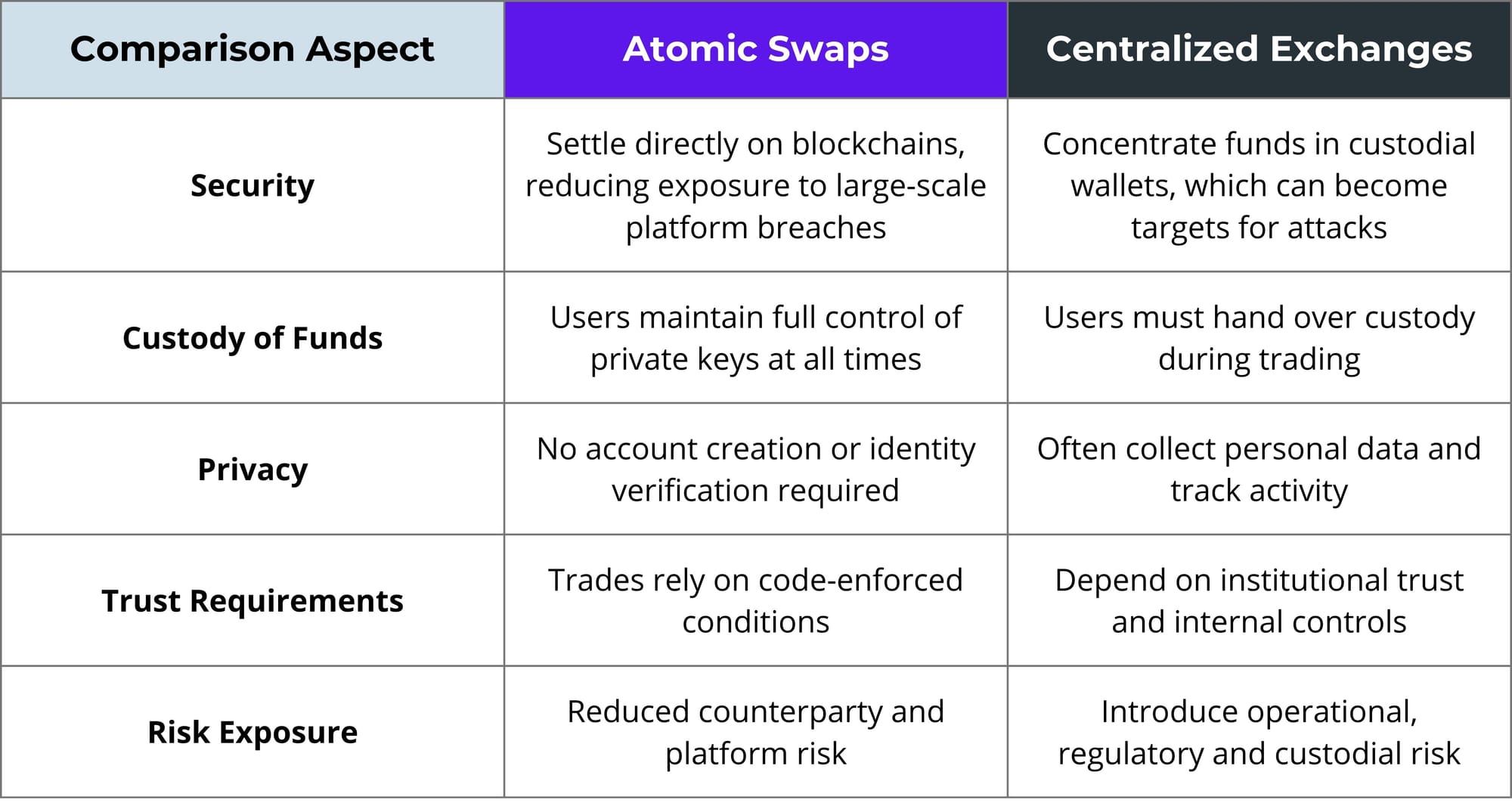
To clearly compare atomic swaps and centralized exchanges, the following table summarizes the key differences across security, custody, privacy, trust and risk:
Benefits of Atomic Swaps Using Komodo Wallet
Komodo Wallet is built to make atomic swaps practical for everyday users, not just developers. It provides a secure environment for native, decentralized cross-chain trading without added trust layers.
Key benefits include:
- Native cross-chain trading without wrapped tokens or bridges
- Full user control over funds before, during and after trades
- Reduced counterparty risk through trustless swap execution
- More than nine years of real-world Atomic Swap development by Komodo Platform
Komodo Wallet supports decentralized trading across a wide range of blockchain ecosystems while maintaining self-custody as a core principle.
When Centralized Exchanges May Still Be Used
Centralized exchanges can still be useful in certain situations. High-liquidity trading pairs, fiat on-ramps and quick conversions may be easier through centralized platforms.
However, these benefits come with trade-offs in custody, privacy and reliance on third parties. Many users choose to combine approaches by using centralized exchanges for entry points and decentralized tools like Komodo Wallet for ongoing trading.
Traders who prioritize speed or need immediate access to a wide range of tokens may temporarily use centralized exchanges, but it’s important to transfer funds to a secure wallet afterward. This hybrid approach allows users to take advantage of liquidity and convenience while maintaining long-term control and security over their assets.
Common Myths About Atomic Swaps
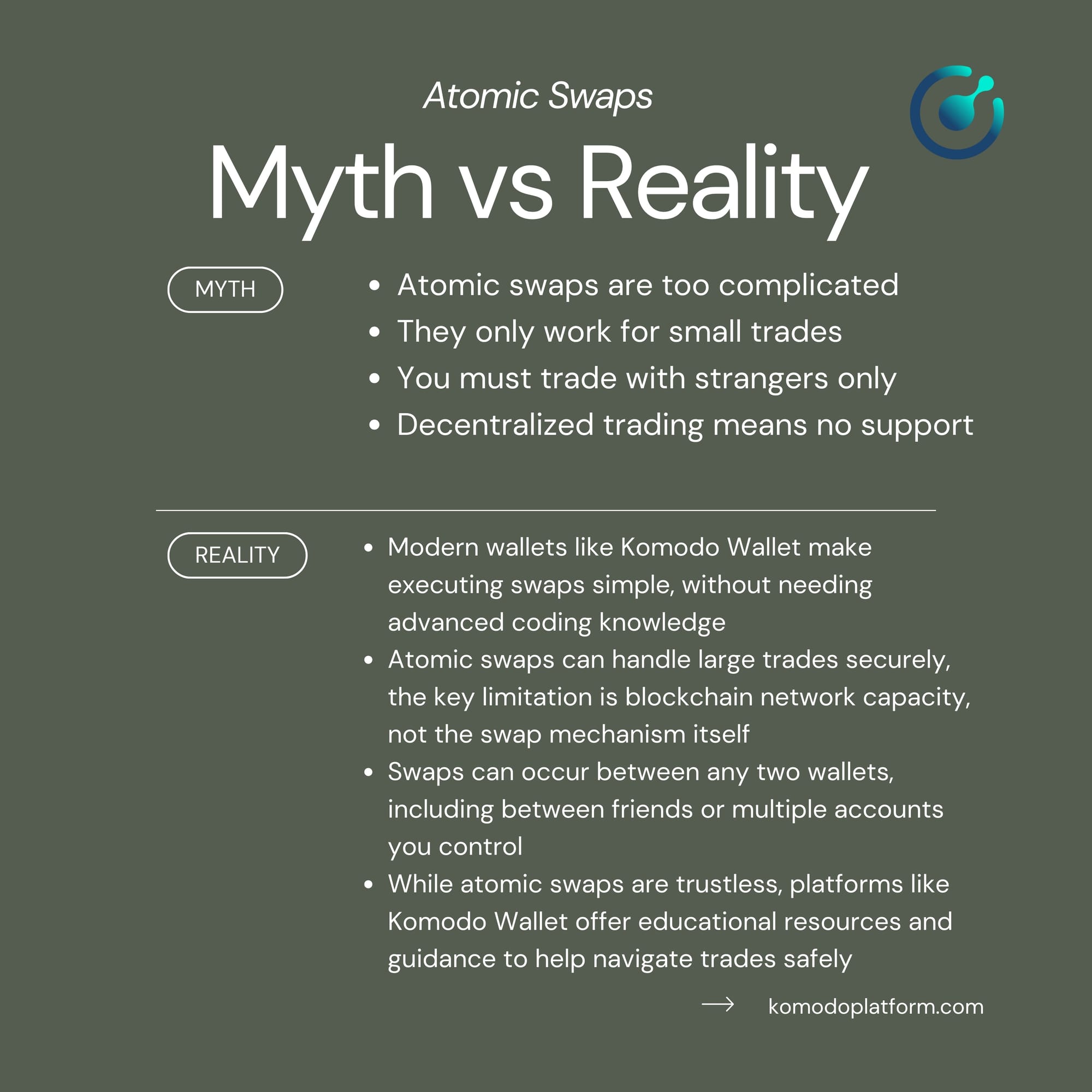
Even experienced crypto users sometimes misunderstand atomic swaps. Clearing up these ones helps traders make wise decisions.
Why Komodo Platform Focuses on Atomic Swaps
Komodo Platform is designed around user ownership and long-term security. Atomic swaps align with this vision by allowing users to trade directly, without giving up control or relying on intermediaries.
By avoiding wrapped assets, bridges and trust-based systems, Komodo Platform reduces structural risk while supporting a decentralized future for cross-chain trading. This approach reflects a long-term commitment to resilience, transparency and user-first design.
Choosing the Right Trading Method: Key Takeaways
Atomic swaps and centralized exchanges serve different purposes and understanding their differences helps traders make smarter decisions. Atomic swaps prioritize self-custody, privacy and reduced third-party risk by making them ideal for users who value control and security. Centralized exchanges offer convenience, high liquidity and faster access to certain trading pairs, but this comes at the cost of relying on third-party trust.
Ultimately, the choice depends on your priorities as a trader. If you value control, privacy and long-term security, atomic swaps provide a clear advantage. For quick trades or fiat access, centralized exchanges may still play a role. Many experienced users combine both approaches, using CEX for entry points and decentralized tools for ongoing trading.
For those looking to experience the benefits of decentralized trading while keeping funds secure, platforms like Komodo Wallet provide a practical solution. By enabling native cross-chain trading with trustless atomic swaps, Komodo Wallet allows users to retain full control of their assets while participating in the broader crypto market.
FAQs about Atomic Swaps and CEX

 How Do Atomic Swaps Protect Privacy?
Trades occur directly between users and no personal data or identity verification is required, ensuring a higher level of privacy.
Are Atomic Swaps Safe From Hackers?
Yes. Atomic swaps settle on-chain and follow cryptographic protocols that guarantee either full execution of the trade or a complete refund by reducing custodial and counterparty risks.
Can Atomic Swaps Be Used With Any Cryptocurrency?
Most major blockchains support atomic swaps, but compatibility depends on the blockchain’s ability to handle the smart contract mechanisms required for trustless trades.
How Long Do Atomic Swaps Take?
The duration depends on blockchain confirmation times for each asset involved. While slightly slower than internal exchange trades, the process is secure and trustless.